Forklift safety lights are visual warning devices that cut through the noise of a busy warehouse by projecting bright, colored beams or lines onto the floor. They serve as an unmistakable alert, warning pedestrians and other operators that a vehicle is approaching.
In a loud industrial environment, traditional backup beepers often become part of the background noise, leaving people vulnerable. This guide will show you why forklift safety lights are the modern answer to this critical safety gap. We'll explore how these visual cues have gone from a "nice-to-have" accessory to an essential piece of any serious safety program. You'll see how strategically placed lights prevent accidents at blind corners and crowded intersections, protecting your most valuable asset: your people.
Why Forklift Safety Lights Are a Non-Negotiable Warehouse Standard
Anyone who has worked on a warehouse floor knows the sound: a constant drone of machinery, conveyors, and alarms that can easily overwhelm your senses. The standard audible beepers on forklifts? They often fade into the industrial soundscape, rendering them almost useless.
This is exactly why forklift safety lights are such a game-changer. They switch the warning from something you hear to something you see.
These lights aren't just gadgets; they represent a fundamental shift in how we approach warehouse safety. By providing a clear, impossible-to-miss visual cue, they slice through the chaos to stop collisions before they can happen. This is especially critical around blind corners, at busy intersections, and down any aisle where people and forklifts share the same space.
Moving from Optional to Essential
Adopting a visual warning system is a proactive step toward creating a stronger safety culture. Instead of relying only on an operator's line of sight or a pedestrian's caution, these lights act as a constant, active reminder that heavy equipment is on the move.
This isn't just a trend; it's now a recognized engineering control for reducing collision risk. OSHA has flagged forklifts as a leading cause of workplace injuries, with more than 7,000 incidents per year in North America alone. This has led to a much stronger expectation for visual warning systems to be used alongside proper operator training. You can read the full research on this market trend.
By implementing visual alerts, you create a system that communicates danger clearly and universally, regardless of language barriers or ambient noise levels. This simple upgrade is a powerful tool for accident prevention.
Putting a comprehensive lighting plan in place does more than just protect your team. It's a strategic move that prevents costly downtime, equipment damage, and lengthy incident investigations. A safer floor is a more productive floor. You can learn more about how to improve warehouse safety and productivity in our guide.
As warehouse operations become faster and more complex, the argument for these lights is undeniable. They are a cost-effective, high-impact investment in the safety and efficiency of your entire facility.
Decoding the Different Types of Forklift Safety Lights
Walking through the options for forklift safety lights can feel like learning a new language. Each type is designed to solve a specific problem on your warehouse floor, and understanding their individual jobs is the key to making a smart investment. Let's break down the most effective lights in simple, practical terms to help you match the right technology to your facility’s unique challenges.
To build the best safety system, you need to know your tools. This means getting familiar with everything from simple spot indicators to more robust solutions like Commander Warning Light Bars. This knowledge lets you layer different types of protection, tackling multiple risks at once.
Blue and Red Spotlights: Forward and Reverse Warnings
Picture a forklift silently approaching a blind corner where a team member is about to walk. This is where spotlights prove their worth. These lights project a bright, focused circle of blue or red light onto the floor, usually 15 to 20 feet ahead of or behind the vehicle.
This beam of light acts as an early warning signal, hitting the ground seconds before the forklift itself appears. It gives pedestrians and other operators just enough time to stop and step back, preventing a potential collision. Simple, but incredibly effective.
Red Zone Lights: Creating Pedestrian Boundaries
While spotlights warn of an approaching forklift, red zone lights solve a different, equally critical problem: keeping people a safe distance from the sides of the machine. These lights cast a crisp, bright red line on the floor along both sides of the forklift, creating a clear visual "no-go" zone.
This is a game-changer in narrow aisles or congested work areas where employees have to work near moving equipment. That red line is an unmistakable boundary. It stops workers from accidentally stepping into the path of a turning forklift, where the tail swing can catch them completely off guard.
The core function of these lights is to transform an invisible danger zone into a highly visible, easy-to-understand boundary. It removes guesswork for pedestrians and reinforces safe distances at all times.
The infographic below captures how these lights cut through the noise and chaos of a busy warehouse floor to create order and safety.
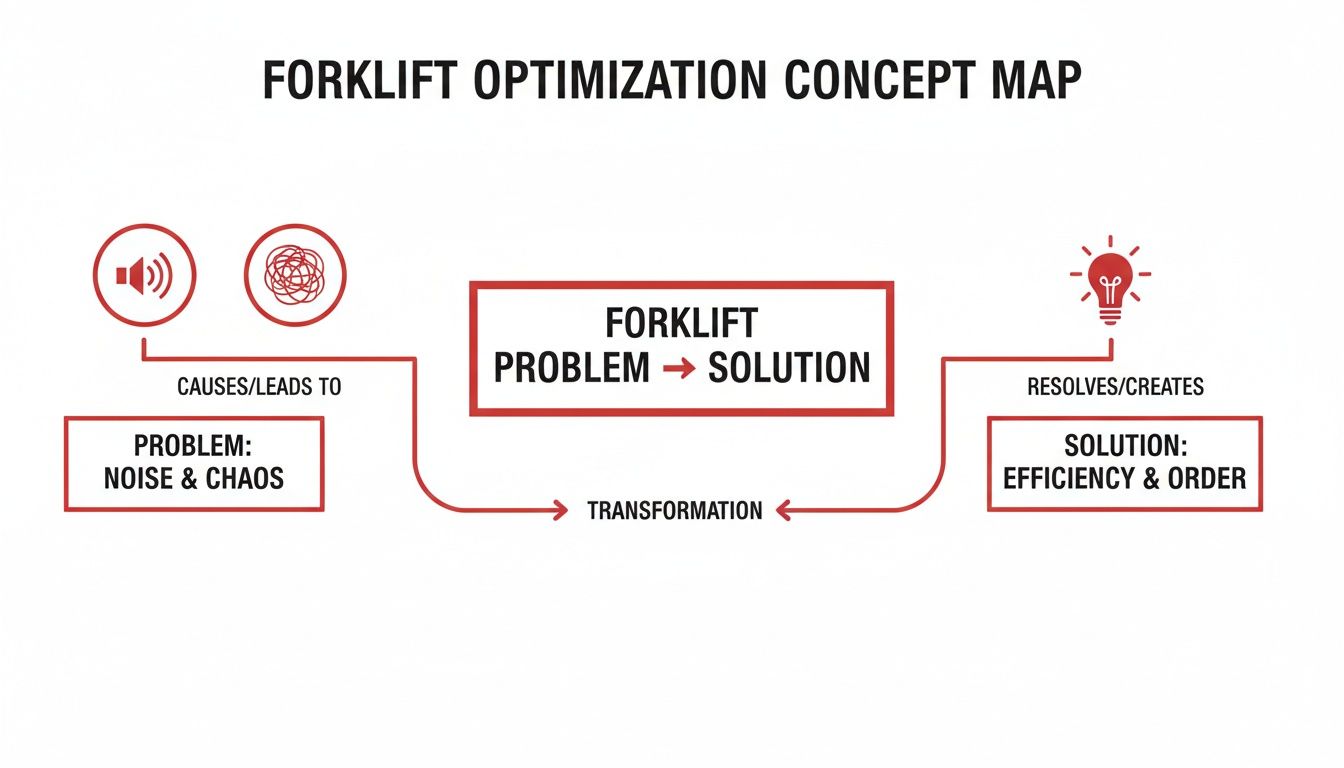
As you can see, where loud alarms can get lost in the shuffle, a focused beam of light offers a simple, universal solution to keep people safe.
Strobe Lights: High-Visibility Alerts
In environments with non-stop traffic, bright overhead lighting, or numerous visual distractions, you need a warning that’s impossible to ignore. That's the job of a strobe light. These high-intensity flashing lights are designed to grab your attention, making them perfect for busy intersections, loading docks, and any spot where a standard light might blend in.
Strobes are usually mounted high on the forklift’s overhead guard to give them 360-degree visibility. Their intense, pulsing flash cuts right through the visual noise, instantly signaling the forklift’s presence to everyone nearby. Think of them as the exclamation point in your visual safety strategy.
A Quick Comparison of Forklift Safety Lights
Choosing the right light or combination of lights comes down to understanding what each one does best. Here’s a quick rundown to help you visualize how they fit into a complete safety system.
| Light Type | Primary Function | Best Use Case | Typical Placement |
|---|---|---|---|
| Blue/Red Spotlight | Provides an early warning of an approaching vehicle. | Blind corners, intersections, and doorways. | Front and/or rear of the forklift, aimed 15-20 feet away. |
| Red Zone Light | Creates a visible safe-distance perimeter. | Narrow aisles and pedestrian work areas. | Mounted on the sides of the forklift's overhead guard. |
| Strobe Light | Delivers a high-impact, attention-grabbing alert. | High-traffic areas, noisy environments, and outdoors. | Top of the forklift's overhead guard for maximum visibility. |
This table is a great starting point for planning your upgrade. By strategically combining these different lights, you can create a comprehensive visual warning system that protects your team from every angle.
How Safety Lights Help You Align with OSHA Guidelines
As a facility manager, you live and breathe compliance. While you won't find "blue spotlights" or "red zone lights" mentioned by name in the official OSHA rulebook, a well-planned forklift safety light system is one of the smartest ways to meet and even surpass federal safety standards. It all comes down to how these lights directly address OSHA's core mission.
The cornerstone of OSHA's authority is the General Duty Clause (Section 5(a)(1)). This is the big one. It mandates that employers provide a workplace "free from recognized hazards that are causing or are likely to cause death or serious physical harm." Forklift-pedestrian collisions are, without a doubt, a recognized hazard, making visual warning systems a critical part of your compliance strategy.
Meeting the General Duty Clause Head-On
When you install forklift safety lights, you're not just adding accessories; you're proactively tackling a known risk. These lights are what OSHA considers an engineering control, a physical change to your environment that designs the hazard out of the process.
OSHA always prefers engineering controls over administrative ones (like new rules or more training) for a simple reason: they don't depend entirely on people remembering what to do. A flashing strobe light or a bright blue spot creeping around a corner is a constant, reliable warning that works whether an employee is distracted or a supervisor is present.
Investing in a well-designed visual warning system creates a defensible, well-documented safety protocol. It demonstrates a clear and tangible commitment to protecting your team, which is a cornerstone of any strong compliance strategy.
Just look at this screenshot from OSHA's own website on Powered Industrial Trucks. The sheer volume of resources tells you everything you need to know.
This level of detail makes one thing clear: forklift operations are always under a microscope. Proactive measures like a solid lighting plan are essential for proving you've done your due diligence.
Building a Stronger Safety Case
Think of safety lights as another powerful layer in your safety program. They don't replace operator training, pedestrian awareness initiatives, or clear floor markings; they reinforce them. This multi-layered defense is exactly what an OSHA inspector wants to see.
A properly implemented lighting system proves that you have:
- Identified a specific hazard: You've acknowledged the real danger of collisions at blind corners and busy intersections.
- Implemented a practical solution: You've installed lights to give everyone clear, advance warning.
- Reduced reliance on human factors: You're using an automated system to alert people, taking some of the pressure off human vigilance.
This systematic approach is what truly matters. Weaving these safety features into your daily operations is a core component of an OSHA-compliant warehouse design that engineers safety into your floorplan. By making visual alerts standard practice, you're not just ticking a box. You're actively lowering your liability and building a workplace that's safer and more resilient for everyone.
Project planning timelines seem to get longer every year, so securing these essential safety components early ensures your facility is protected without delay. Contact our team for a free quote and see how quickly you can implement these vital upgrades.
Weaving a Web of Safety: Your Strategic Forklift Lighting Plan
Just buying a box of forklift safety lights is easy. The real work and the real payoff come from deploying them intelligently. Turning that expense into a life-saving investment requires a strategic plan, not just guesswork. Every facility has its own unique quirks and challenges, and a smart plan makes sure every single light you install delivers the biggest possible impact.
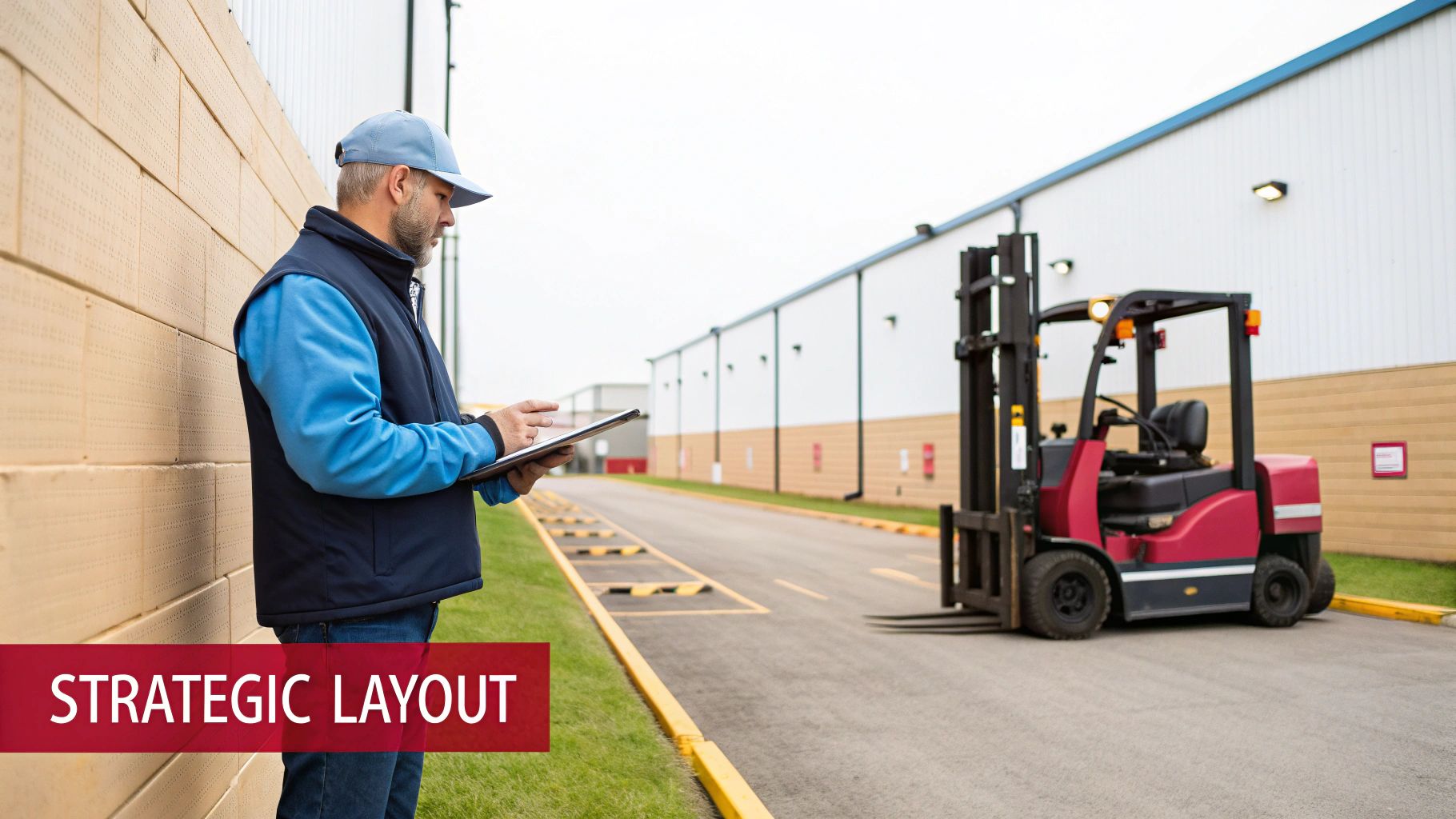
The process starts with a walk-through. Before you even think about mounting a light, you need to get out on the floor and map your risk areas. A little planning upfront ensures your investment works from day one, preventing accidents and saving you from costly and frustrating readjustments down the road. This is about being proactive, not reactive.
Putting Your Facility Under the Microscope
First things first: you need to map out your operational landscape. Think of it like a detective investigating a scene before a crime happens. The goal is to get a crystal-clear picture of where, when, and why a collision is most likely to occur.
Your safety assessment should zero in on a few critical factors:
- High-Traffic Zones: Where are the hotspots? Pinpoint the busiest intersections, crowded loading docks, and main aisles where forklifts and pedestrians are constantly crossing paths.
- Blind Spots: Every warehouse has them. Find all the blind corners, doorways, and the ends of rack aisles that completely block the line of sight for operators and pedestrians alike.
- Ambient Light Levels: Take note of areas that are poorly lit or have intense glare from overhead lights or windows. These conditions can easily wash out standard warning lights.
- Pedestrian Workstations: Mark any spot where team members are working on foot near active forklift routes. This includes packing stations, inventory check desks, or quality control areas.
This assessment is the bedrock of your entire lighting strategy. For really complex facilities, it’s easy to miss hidden dangers. Our experts specialize in comprehensive warehouse design and layout services and can build a free, no-obligation plan that’s tailored specifically to your operation.
Best Practices for Light Placement
Once you’ve identified your high-risk zones, it’s time for strategic placement. The goal is to make forklifts impossible to miss without creating new problems, like distracting glare for the operator.
Here are some proven best practices for getting your lights in the right spots.
Your Positioning Checklist for Maximum Safety
- Spotlights for a Heads-Up: Mount your blue or red spotlights on the front and rear of the forklift’s overhead guard. You’ll want to adjust the beam to hit the floor about 15 to 20 feet in front of (or behind) the vehicle. This gives anyone approaching a blind corner plenty of time to react.
- Red Zone Lights for Side Protection: Install red zone lights on the sides of the overhead guard, aiming them straight down. Make sure the projected line creates a bright, unmistakable "no-go" zone around the forklift, which is especially critical in narrow aisles.
- Strobes for Getting Attention: Place high-intensity strobe lights at the highest point of the forklift, usually right on top of the overhead guard. This ensures 360-degree visibility, making them incredibly effective in loud, chaotic areas where horns or other warnings might get drowned out.
- Avoid Blinding the Operator: This is crucial. When mounting any light, triple-check that it won't reflect into the operator's eyes or create a blinding glare off a shiny floor or piece of equipment. Proper angling is everything.
A well-executed lighting plan is more than just an equipment upgrade; it's a communication system. Each light sends a clear, simple message about the forklift's presence, direction, and proximity, creating a safer and more predictable environment for everyone.
Getting this right the first time is essential. With facility upgrade project lead times getting longer, planning your safety installations now helps you stay ahead of future delays. Request a Quote or give us a call at (800) 326-4403 to talk through a custom lighting plan for your facility.
What's the Real ROI on Your Safety Light Investment?
It’s easy to look at forklift safety lights as just another line item on the budget, a necessary expense to check a safety box. But that’s the wrong way to think about it. The real value is buried in the costs you don't have to pay. Calculating the true return on investment (ROI) flips the script, turning this purchase from a simple cost into a strategic move that shores up your bottom line.
The financial case snaps into focus the moment you look at the real-world cost of a single forklift incident. It's never just about the initial repair bill.
The Hidden Price Tag of a Single Incident
One collision can send a shockwave of expenses through your entire operation, with aftershocks felt for weeks, sometimes months. Once you understand these cascading costs, you'll see why proactive safety gear like a solid lighting system is such a bargain.
Think about all the direct and indirect hits you take:
- Equipment Downtime and Repairs: This one’s obvious. You have to pay for parts and labor to fix the forklift. But you're also losing money every minute that machine is out of commission.
- Investigation and Administrative Hours: Every incident demands a full investigation. That means pulling managers, supervisors, and safety staff off their regular jobs for hours or even days of interviews, paperwork, and meetings.
- Skyrocketing Insurance Premiums: A recordable injury or major property damage is a surefire way to get a nasty surprise from your insurance provider. Those higher premiums will follow you for years.
- Operational Gridlock: An accident doesn't just happen in a vacuum. It can shut down an entire aisle or section of your warehouse, grinding workflows to a halt, delaying shipments, and ultimately damaging customer relationships.
Shifting from Expense to Investment
Here’s the bottom line: a safer warehouse is a more efficient warehouse. When your crew feels protected, they work with confidence and focus. That leads directly to smoother operations and fewer interruptions. The cost of a full lighting system is a drop in the bucket compared to the massive losses from just one accident.
The market trends tell the same story. The global market for dedicated forklift safety lights hit around US$290 million in 2023 and is projected to nearly double to US$560 million by 2032. The takeaway for any facility leader is clear: the cost of adding these lights is a rounding error next to the cost of an incident. You can dive deeper into these market findings and forklift safety.
By preventing just one minor incident, a set of forklift safety lights can pay for itself many times over. The real ROI isn't just in the accidents you prevent, but in the operational continuity and efficiency you protect.
With facility upgrade timelines getting longer, planning your safety enhancements now is just smart business. Get ahead of the curve and you’ll avoid installation backlogs and get your team protected sooner. Request a Quote and see for yourself how affordable this essential upgrade really is.
Upgrade Your Warehouse Safety Today
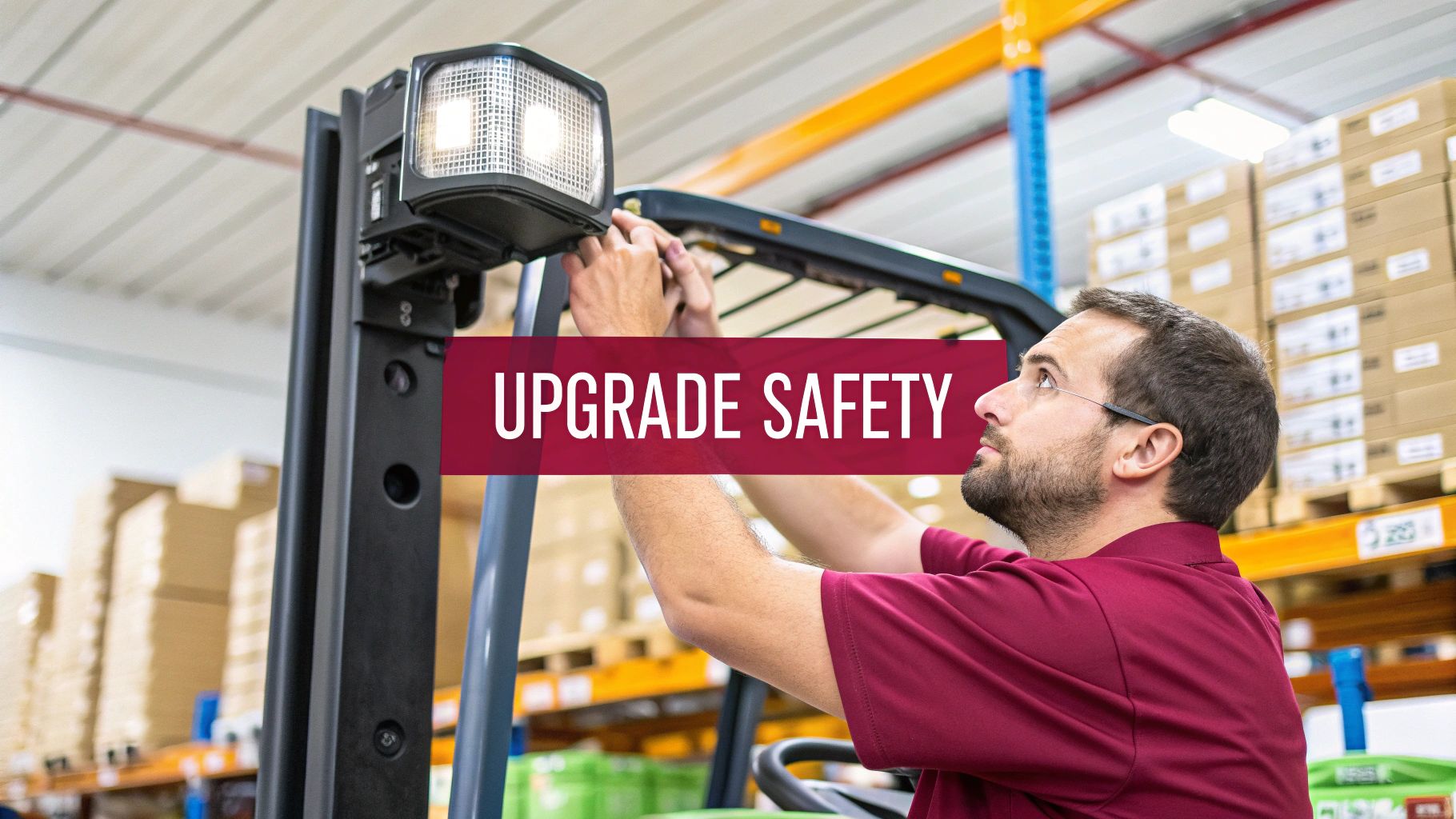
A safer, more efficient warehouse isn't a distant goal; it's well within reach. Forklift safety lights are a proven, high-impact solution for protecting your team and keeping your operations running smoothly. At Material Handling USA, we make upgrading your fleet simple by pairing high-quality, durable products with industry-leading shipping speeds to get your facility protected faster.
Our real advantage, though, is our expertise. We provide free, no-obligation facility layouts to ensure you get the perfect solution for your specific needs. This helps you avoid the guesswork and costly mistakes that can come with a one-size-fits-all approach. Take the next step towards a safer workplace today.
Why Choose Material Handling USA
Selecting the right partner for your safety upgrades is just as critical as choosing the right products. Our approach is built on providing tangible value that helps you improve safety without disrupting your operations. We focus on what matters most to facility managers.
Here’s what sets us apart:
- Competitive Pricing: We offer top-tier forklift safety lights and equipment at prices that respect your budget, ensuring you can achieve a higher standard of safety affordably.
- Fastest Shipping and Delivery: We understand that safety can't wait. Our logistics network is optimized for speed, meaning you get your products faster than from anyone else in the industry.
- Quality Materials and Products: Every light and accessory we sell is built to withstand the tough demands of a warehouse environment, ensuring long-lasting performance and reliability.
- Free Layouts and Designs: Our in-house experts will work with you to create a customized lighting plan for your facility, completely free and with no obligation to purchase.
By partnering with us, you gain more than a supplier; you gain a dedicated safety consultant. Our goal is to provide a complete solution that integrates seamlessly into your workflow, maximizing protection and minimizing installation hassle.
Your Path to a Safer Facility
Ready to make a change? We've made it easy to get started, whether you know exactly what you need or could use some expert guidance. With project lead times for facility upgrades getting longer, securing your safety equipment now ensures faster installs and helps you avoid future delays.
For immediate needs and straightforward purchases, our online store is the fastest way to get the forklift safety lights you need. Browse our selection and place your order in minutes.
If you're planning a larger implementation or need advice on the best solution for your unique challenges, our team is ready to help. Just reach out for a personalized consultation.
Your safer warehouse is just a click or a call away. Explore your options below and take the definitive step toward protecting your people and your productivity.
Shop Now or Call (800) 326-4403 to Request a Quote.
Common Questions About Forklift Safety Lights
When you're getting ready to invest in new safety gear, a few key questions always come up. We get it. You need clear, straightforward answers before you can make the right call for your team. To help you move forward with confidence, we've put together answers to the questions we hear most often from managers just like you.
Are Forklift Safety Lights an OSHA Requirement?
This is the big one, and the answer isn't a simple yes or no. OSHA doesn't have a specific rule that says "you must install a blue spotlight on every forklift." However, that's not the end of the story.
What really matters here is OSHA’s General Duty Clause. This is a catch-all rule that requires employers to protect workers from known, serious hazards. Since everyone knows that collisions between forklifts and pedestrians are a major risk in any warehouse, failing to address it is a big problem.
Installing safety lights is a practical, highly visible way to mitigate that exact hazard. It shows you're taking proactive steps to create a safer workplace, which is exactly what the General Duty Clause is all about.
What Is the Difference Between a Blue Spot Light and a Red Zone Light?
Both lights are about making people aware of nearby forklifts, but they do two very different jobs. Think of it like this: one is a warning sign, and the other is a physical boundary.
-
A blue spot light acts like an early warning system. It throws a concentrated spot of light 15 to 20 feet ahead of or behind the forklift. Its job is to shout, "Hey, a forklift is coming!" before you can even see it. This is perfect for blind corners, doorways, and busy intersections.
-
A red zone light creates a visual "keep out" zone. It projects bright red lines on the floor along the sides of the forklift, clearly marking the danger area. This tells pedestrians exactly how much space to give the machine, preventing them from accidentally stepping into its path.
How Many Lights Should I Install on Each Forklift?
There’s no one-size-fits-all answer here, as it really depends on your facility's layout and traffic patterns. But a great starting point for most operations is one forward-facing blue light and one rear-facing light. This gives clear directional warnings as the vehicle moves back and forth.
For warehouses with a lot of foot traffic or tight aisles, the best practice is to add two red zone lights, one on each side. This creates a complete 360-degree visual safety perimeter around the forklift, leaving no doubt about where people should and shouldn't be.
Our team can actually help you figure out the perfect setup. We offer a free, no-obligation layout to map out the optimal light configuration for your unique space.
Can These Lights Be Installed on My Existing Forklifts?
Absolutely. The good news is that nearly all safety lights are designed to be universal. They can be easily retrofitted onto almost any make or model of forklift you already have in your fleet.
They wire directly into the forklift's own power source and typically come with all the mounting brackets you need. It’s a simple, cost-effective upgrade that boosts the safety of your entire operation without the massive expense of buying new machines.
At Material Handling USA, we don’t just sell products; we provide the expertise you need to build a complete safety lighting system that works. With lead times for facility upgrades getting longer across the industry, locking in your equipment now is the best way to avoid delays and get your facility protected sooner.
Take the next step toward a safer, more efficient warehouse. Call us at (800) 326-4403 or Request a Quote to get started on your free layout and design.